Blog
The Yoga Sutras & Bhakti Sutras in Light of Personal and Impersonal Bhakti
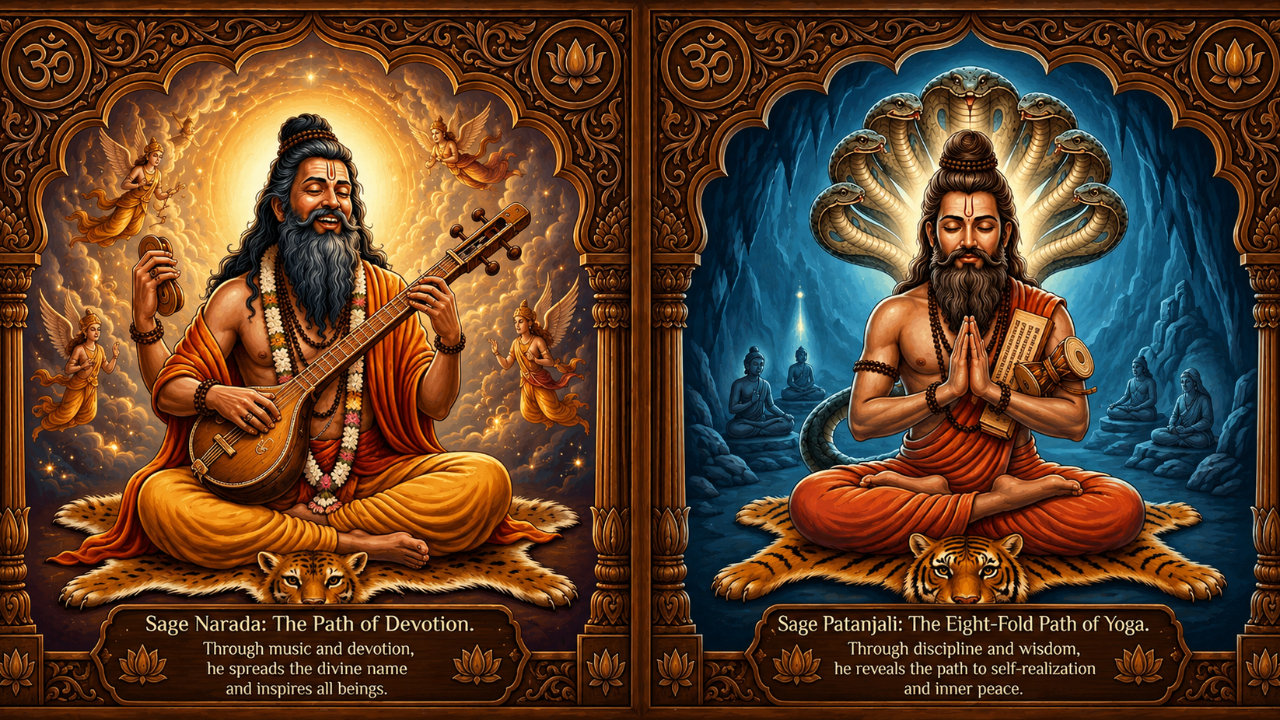
May 2026 | The Yoga Sutras & Bhakti Sutras in Light of Personal and Impersonal Bhakti
No one can say with finality that God is only ‘this’ and nothing else. He is formless, and again He has forms. For the bhakta He assumes forms. But He is formless for the jnani, that is, for him who looks on the world as a mere dream. The bhakta feels that he is one entity and the world another. Therefore God, reveals Himself to him as a Person. But the jnani — the Vedantist, for instance — always reasons, applying the process of ‘Not this, not this’. Through this discrimination he realises, by his inner perception, that the ego and the universe are both illusory, like a dream. Then the jnani realises Brahman in his own consciousness. He cannot describe what Brahman is.
The Gospel of Sri Ramakrishna
Volume I, Chapter - 6 October 28, 1882
Class 1: The Foundations of The Yoga Sutras (Raja Yoga) & The Bhakti Sutras
Class Topic: By exploring the first the sutras in the Yoga Sutras and Bh...
Kriya Blog # 5 - Sanskrit Origins & Its Place in Yogic Text, Classical Yoga & Ayurveda

Kriya Blog # 5 - Kriyā & The Yoga Sutra
The word Kriya is found in the Yoga Sutras of Sage Patanjali four times. Interestingly it is only used in the second chapter called the Sadhana Pada. We could translate this as the chapter relating to spiritual practice. Kriya Yoga is mentioned in the 1st Sutra and then reiterated in a similar context in Sutra 32. The word Kriya is then used two other times without referring to Kriya Yoga. In Sutra 18 and 36 the word Kriya is used to describe actions. Kriya Yoga in the Yoga Sutras does not explain Yoga sequencing, use of Pranayama, Bandha etc. but it does highlight Bhakti as īśvarapraṇidhāna, Karma as tapaḥ (tapasya) and Jnana Yoga as svādhyāya. The first Sutra of the Sadhana Pada states:
तपः स्वाध्यायेश्वरप्रणिधानानि क्रियायोगः ॥१॥
tapaḥ svādhyāy iśvarapraṇidhānāna kriyā yogaḥ ॥1॥
Austerity (tapaḥ), self-inquiry (svādhyāya), and devotional surrender to the Supreme being (īśvarapraṇidhāna) are the parts of kriya yoga. ||1||
Tapasy...
Kriya Blog #2 - Sanskrit Origins & Its Place in Yogic Text, Classical Yoga & Ayurveda

Kriya Blog #2 - Sanskrit Origins & Its Place in Yogic Text, Classical Yoga & Ayurveda
Section 2 - Kriyā & Shastra
What is Shastra?
The teachings of Yoga, Hinduism, Buddhism, Ayurveda, and all of the Vedic schools have an in-depth tradition of scriptures or text. Shastra is the word in Sanskrit that translates as scriptures. Yogic Shastra or Yogic Scriptures are loaded with amazing information about Yoga. For some, the word scripture might bring up unpleasant memories of Bible school. Yogic Shastra is based out of profound realizations. Shastra is an attempt to point towards the enlightened state in writing, which can not be expressed in any words or language. Yogic texts offer us a view into Self Revlead Knowledge of higher states of consciousness. This is different than ordinary dogmatic religions.
Cultural Misappropriation - Why Shastra is Needed in the Yoga Marketplace
Is Yoga a form of cultural misappropriation? This is a complex topic. I could say a lot about it, b...
Are you enjoying the blog? Stay connected with news and updates and get a FREE PDF GUIDE: 10-Facts Every Yoga Practitioner and Teacher Needs to Know!
This short guide lays out simply facts about the Yoga tradition you should have learned in Yoga Teacher Training but probably didn't. By singing up to get the Free PDF you are joining our mailing list to receive the latest news and updates from our team.
Don't worry, your information will not be shared and you can unsubscribe at any time
Recent Posts

Categories
All Categories